



Understanding the Connection Between TMJ Disorder and Sleep Apnea
August 14, 2026
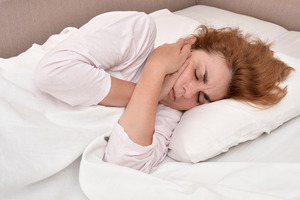
It’s no secret that TMJ disorder and sleep apnea can both take a significant toll on your quality of life if they’re left untreated for too long. But what many people don’t realize is that these two conditions can potentially be linked together. What is the nature of the connection between TMJ disorder and sleep apnea? And how can your general dentist help you treat both conditions?
What are TMJ Disorder and Sleep Apnea?
TMJ is short for temporomandibular joint, which is the name of the joint that connects the lower jaw to the skull. If your TMJs are not functioning properly, you have what is known as a TMJ disorder. Not only can this condition cause jaw pain and headaches, but it can make it harder to fully open or close your mouth.
Meanwhile, sleep apnea is when breathing repeatedly stops and restarts while you’re asleep. These pauses in your breathing can disrupt the sleep cycle and prevent you from getting the quality rest that your body and mind need to function at their best. In most cases, sleep apnea is the result of soft tissues in your throat relaxing and blocking the airway.
The Relationship Between TMJ Disorder and Sleep Apnea
In some cases, TMJ disorder and sleep apnea may share a common contributing factor: a misaligned jaw. When your jaw is not in its proper position, it can put an excessive amount of stress on your jaw joints, thereby leading to a TMJ disorder. At the same time, a misaligned jaw can narrow the airway and leave it more prone to obstruction, thereby increasing the likelihood of sleep apnea occurring.
Furthermore, sleep apnea can sometimes make a TMJ disorder worse. When your breathing is interrupted while you’re asleep, your body may end up instinctively pushing your jaw forward in order to open the airway. This movement can put additional strain on your jaw joints and exacerbate TMJ-related symptoms.
Treating TMJ Disorder and Sleep Apnea
Once TMJ disorder and sleep apnea have been properly diagnosed by an expert, you can take the appropriate steps to address them. Oftentimes, it may be possible to treat both conditions at the same time with a personalized oral appliance. If you wear this device at night, it can move the jaw slightly forward to help it find a better resting position. Not only can this take some of the pressure off your jaw joints, but it can also open your airway and improve breathing during sleep.
There are other treatment options available for TMJ disorder and sleep apnea. The option that’s right for you can vary depending on your unique situation. Nevertheless, it’s important to act quickly to get the care you need so that you can put a stop to your jaw pain and start enjoying more restful nights again.
About the Author
Dr. Luciano Marini has decades of dental experience under his belt. He is a graduate of the University of Connecticut School of Dental Medicine, and he is a member of the American Dental Association, the Connecticut Dental Association, and the Waterbury Dental Society. At Waterbury Smiles, he offers a comprehensive menu of services that includes TMJ treatment and sleep apnea treatment. If you’re concerned about jaw pain or sleep-disordered breathing, you can schedule an appointment with Dr. Marini by visiting his website or calling (203) 575-9097.
No Comments
No comments yet.
RSS feed for comments on this post.
Sorry, the comment form is closed at this time.